Fifteenth Amendment Ratification Celebration in Portsmouth, Ohio: Allen Chapel of the AME Church Hosts Integrated Celebration in 1870
The ratification of the Fifteenth Amendment in 1870 marked the culmination of a decades long struggle to end slavery and establish a new national republic that guaranteed equal rights to all its citizens, regardless of their "race, color, or their previous condition of servitude." The right to vote, guaranteed to African American men through the Fifteenth Amendment, was thought to be the capstone in a renovated representative democracy, one where racial discrimination was no longer the law of the land. The Fifteenth wrapped up the business first begun with the Thirteenth Amendment, which abolished slavery and involuntary servitude, except as a punishment for criminal violations of the law. The Fifteenth Amendment was meant to establish true equality by opening elections and public office to African American men.
Text
On Wednesday, the 27th of April 1870, a coalition of white and black residents turned out for a celebration hosted by Allen Chapel of the African Methodist Episcopal (AME) Church. With ratification of the Fifteenth Amendment, there was much to celebrate for those who had long championed the cause of equal rights in Portsmouth, Ohio. The gathering was a who's who of the old local abolition movement, which following the ratification of the Thirteenth Amendment had become what today is recognized as the Civil Rights Movement. Many of those in attendance had been involved in local politics, the abolition movement, and the Underground Railroad as far back as the 1820s.
The host congregation of the program -- Allen Chapel -- had been intimately tied to the Underground Railroad, with many of its members engaged in the secretive work, tracing their church's roots to 1837, when African American Methodists began meeting on their own in the old Wheeler Academy building on Market Street. In 1868, the congregation purchased the old Methodist Spencer Chapel on Seventh Street, between Chillicothe and Gay Streets. This church structure originally had been built in 1853 by the city's German Methodist society and was named for Rev. R. A. Spencer, who had donated the lot on Seventh Street. In 1868, Spencer Chapel was re-dedicated as Allen Chapel in honor of the Rev. Richard Allen, who is remembered as the founder of the AME Church. This was the location of Portsmouth's celebration of the ratification of the Fifteenth Amendment.
As the congregation grew and the city's black residential area of the city shifted northward, above the railroad tracks into what is now known as the North End, the location of Allen Chapel would move, as well. In 1920, the congregation built their present structure at Twelfth and Waller streets.
The Portsmouth Tribune, a Republican party affiliated newspaper, reported on the Ratification Celebration, providing both a description of the chapel's decorations and the crowd that had assembled. Their detailed description was republished in the columns of the Portsmouth Daily Times and read as follows:
"The colored people of Portsmouth together with a number of their white friends, held a ratification jubilee on Monday evening last in Allen Chapel. The room was handsomely decorated with flags and portraits of John Brown, Abraham Lincoln, Grant and Colfax. John Cooper, (colored) was called to the chair, and G.W. Holland, (colored) appointed Secretary. The meeting was opened with singing by the choir, led by Mrs. Weaver and music on the organ by Miss Steele, followed by prayer by Rev. Jas. Mitchell, of Bigelow Chapel. The proclamation was then read by Miss Lizzy Baker (colored). The speaking was limited to twenty minutes each, and Milton Kennedy, the old Free Soiler, who has held on through evil as well as good report, opened with a very effective and appropriate speech. Remarks were then made in succession by Wm. E. Ross, (colored), H. W. Farnham, Capt. Isaac Fullerton, Hon. E. Glover, Rev. P. Tolliver, (colored), Rev. Summonds and Judge Searl. A song entitled 'The Colored Volunteer' was sung by Wm. E. Ross, the audience joining in the chorus. After the speaking, all united in singing 'John Brown's body lies mouldering in the tomb.' The colored folk were out en mass, men, women, and children, and the whites were sandwitched [sic] among them, all enthused with the spirit of the occasion. The celebration was a pleasant success. Everything was done with decency and in order, and no word spoken calculated to reflect upon political opponents."
John Cooper, a longtime member and trustee of Allen Chapel, served as the presiding officer of the program. At the time, Cooper managed a popular restaurant in the Biggs House on Front Street, Portsmouth's most luxurious hotel. In 1875, Cooper would open his own restaurant on Second Street in what was then known as the Huston Stone Front, but which had been originally built by Milton Kennedy in 1853.
A community choir was directed by a Mrs. Weaver, while a Miss Steele played on the Chapel's organ. "The old Free Soiler" Kennedy had been Portsmouth's most outspoken abolitionist, who, along with his brother-in-law Joseph Ashton, assisted runaway slaves on the Underground Railroad. William E. Ross, another Civil War veteran, who led the singing of "The Colored Volunteer" would soon become Portsmouth's first African American city council member, when elected in 1894. The other speakers included black and white ministers, veterans, and other elected officials, most notably, Judge F. C. Searl of the Scioto County Probate Court, and the Honorable Elijah Glover, who then represented Scioto County in the Ohio House of Representatives.
Searl had been first elected Probate Judge in 1860 and served multiple terms. During the Civil War he served as the Chairman of the Military Committee of Scioto County, supervising the enlistment of volunteers. And, according to Nelson W. Evans, the noted Scioto County historian, Searl had been an abolitionist since the age of eight years old and as "a friend of the negroes, he believed in recruiting them for service and did so. He put them into service and secured them bounties from $150 for single men to $250 for married men."
Elijah Glover is often remembered as the founding editor of the Portsmouth Courier (what in time became the Portsmouth Tribune). He had a long career in Portsmouth politics, beginning as a Whig and then as a Republican. In early 1870, when the Ohio Legislature voted on the ratification of the Fifteenth Amendment, Glover turned out to be one of the critical votes that had ensured its adoption. The amendment passed by one vote.
When news of Ohio's ratification first broke, James Newman, the editor of the Portsmouth Times, the city's Democratic Party alligned newspaper, penned an editorial that credited Scioto County with its ratification. As the leader of the local Democratic Party and his party's candidate who had recently lost the election to Elijah Glover, Newman blamed ratification in Ohio on his own electoral defeat, demonstrating just how closely divided local residents were on the question of equal rights for African Americans. Glover had won the race by a mere twenty-three votes.
Newman told his readers: “Scioto County is responsible for the ratification of the Fifteenth Amendment upon the part of Ohio. The vote of the member from this county, in the House of Representatives, decided its fate. The change of one vote would have made the result a tie, and thereby defeated the ratification. Twenty-three votes in this county would have turned the scale. We can call the names of more than that many Democrats in Scioto county who did not vote at the last election. They can certainly never forgive themselves for this inexcusable dereliction of duty. Let this fact be a warning in the future, and prompt every Democrat never to forego exercising the right to the ballot.”
Ratification of the Fifteenth Amendment may have marked a new era for Ohio and the larger United States, but it did not mark the end of the struggle for equality and voting rights. The supporters of civil rights that gathered in Allen Chapel would go on to fight racial segregation and other forms of what became known as Jim Crow discrimination.
Sources
Nelson W. Evans, A History of Scioto County, Ohio, Together with a Pioneer Record of Southern Ohio (Portsmouth, Ohio, 1902): 299-301.
"Responsible," Portsmouth Times (5 February 1870).
"The Fifteenth Amendment in Portsmouth: Grand Ratification and Speeches by White and Colored Speakers!," Portsmouth Times (30 April 1870).
Files

Allen Chapel of the AME Church on Seventh Street, formerly Spencer Chapel of the German Methodist Society, Portsmouth, Ohio
Originally built in 1853 for Portsmouth, Ohio's German Methodist Society, and known as Spencer Chapel, this house of worship was re-christened Allen Chapel in 1868 when it became the home of the city's African Methodist Episcopal (AME) Church. At the time of the celebration of the Ratification of the Fifteenth Amendment on the 27th of April 1870, Rev. Philip Toliver led the congregation and many of its members were not only veterans of the Union Army but also had worked in various capacities on the Underground Railroad. The selection of Allen Chapel -- home of Portsmouth's oldest black religious organization, with a founding date of 1837 -- as the location for the ratification celebration speaks to the centrality of this congregation and Portsmouth's black community in the city's abolition and civil rights movements. | Source: Henry A. Lorberg, Scrapbook Volume 7, Local History Digital Collection, Portsmouth Public Library, Portsmouth, Ohio. https://www.yourppl.org/history/items/show/23088 | Date: c. 1870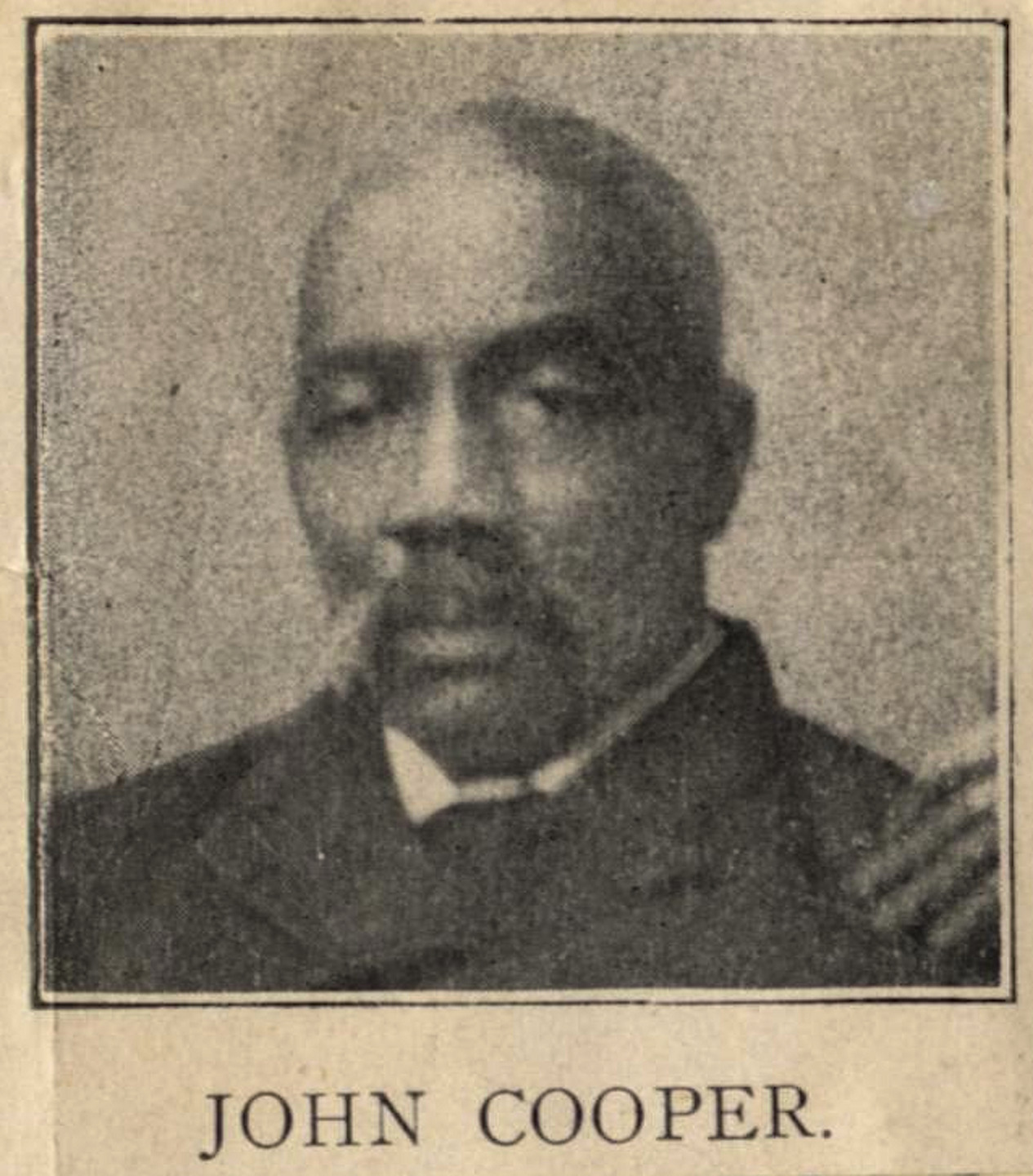
Portrait of John Cooper
John Cooper, a longtime member and trustee of Allen Chapel, served as the presiding officer for the celebration of the Ratification of the Fifteenth Amendment in April 1870. Cooper had been born in Virginia, circa 1827. Whether he was born free, had been emancipated, or had escaped his bondage is not clear from the historical record, but it appears he had settled in Portsmouth as early as 1849, when he found employment in a Front Street hotel. Cooper first appeared in the Portsmouth, Ohio Census in 1860, where his occupation was listed as servant. At the time of the ratification of the Fifteenth Amendment, Cooper managed a popular restaurant in the Biggs House on Front Street, the city's most luxurious hotel. In 1875, Cooper would open his own restaurant on Second Street in what was then known as the Huston Stone Front, but which had been originally built by Milton Kennedy in 1853. | Source: Henry A. Lorberg, Scrapbook Volume 7, Local History Digital Collection, Portsmouth Public Library, Portsmouth, Ohio. https://www.yourppl.org/history/items/show/22975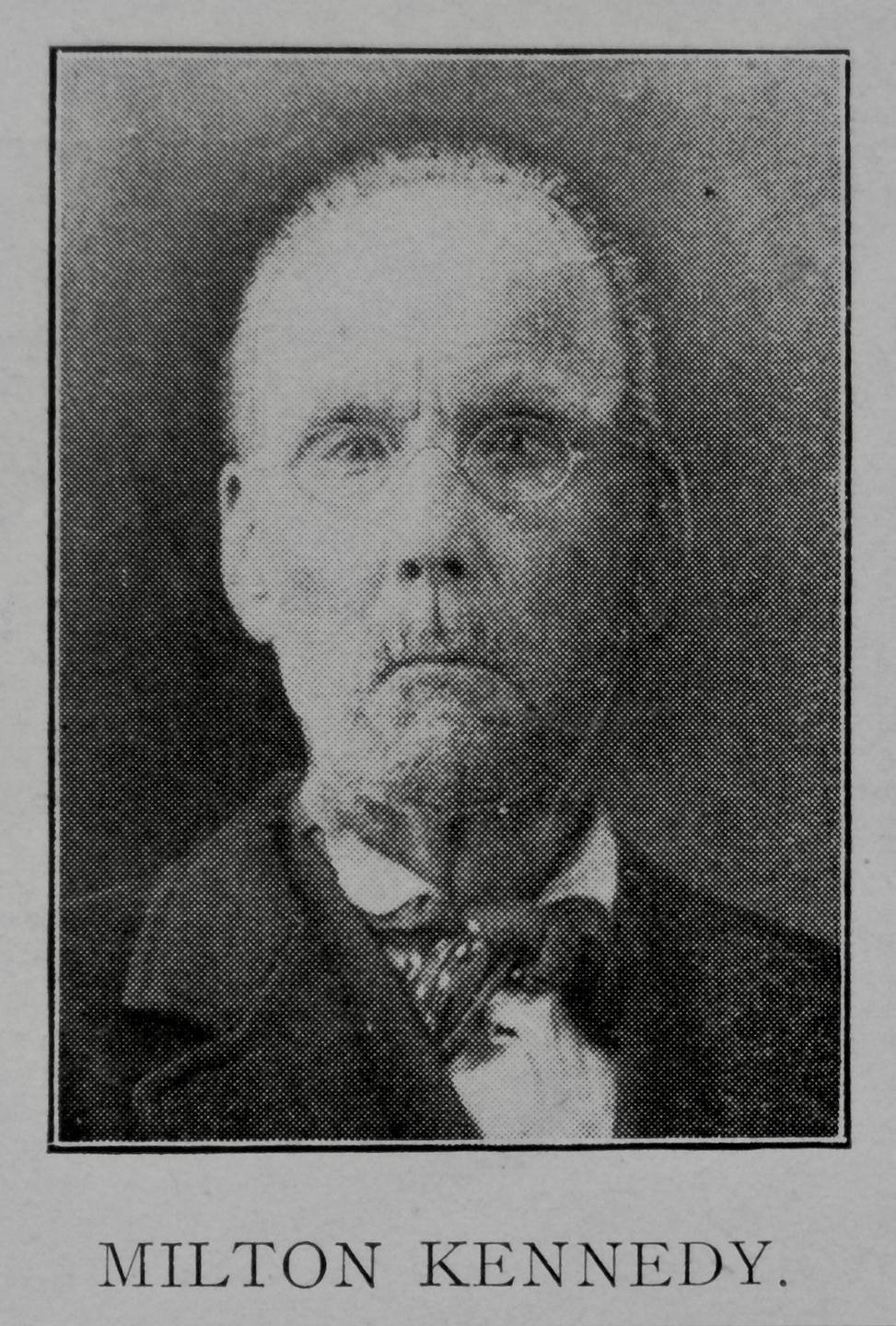
Portrait of Milton Kennedy
Milton Kennedy is remembered as one of the most outspoken abolitionists in the city of Portsmouth, Ohio. He helped Freedom Seekers find safe passage on the Underground Railroad. In 1852, Kennedy built the first three-story building on Second Street and opened a feed and seed store on the ground floor. Soon he would be joined in the business by his brother-in-law, Joseph Ashton, who was also a vocal abolitionist and agent of the Underground Railroad. Kennedy was a founder of the Republican Party in Scioto County, the State of Ohio, and the United States, having attended and served as a delegate at the first meetings of these organizations. He was among only a handful of supporters of the Free Soil Party in Scioto County in the 1850s. Both he and Joseph Ashton belonged to Portsmouth's "Radical Church," an antislavery Methodist society, which met on Fifth Street. | Source: Henry A. Lorberg Scrapbook Volume 5, Local History Department, Portsmouth Public Library. https://www.yourppl.org/history/items/show/2018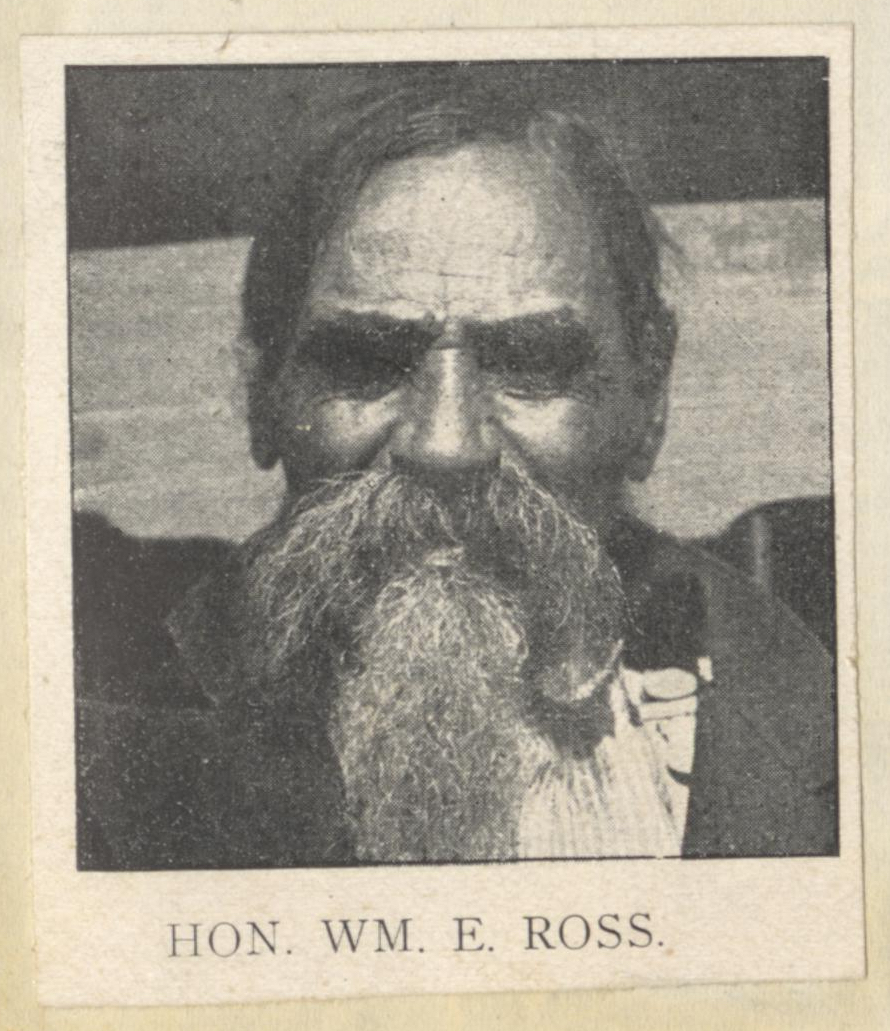
Portrait of the Hon. William E. Ross
William E. Ross is remembered as Portsmouth, Ohio's first elected black city councilperson, serving one term, 1894-1896, representing the old Sixth Ward. A native of the city, Ross was born on 9 April 1833, with his family having roots in Scioto County dating back to at least 1813, when his half-brother Joseph Tanner first settled in Alexandria. During the Civil War, he served as a hospital steward with Company B of the 27th Regiment of US Colored Infantry. Ross led the singing of the "Colored Volunteer" during Portsmouth's celebration of the Ratification of the Fifteenth Amendment in April 1870. Upon his death on 20 August 1910, Ross was buried with military honors in Greenlawn Cemetery's Soldiers Circle. | Source: Henry A. Lorberg, Scrapbook Volume 4, Local History Digital Collection, Portsmouth Public Library, Portsmouth, Ohio. https://www.yourppl.org/history/items/show/22336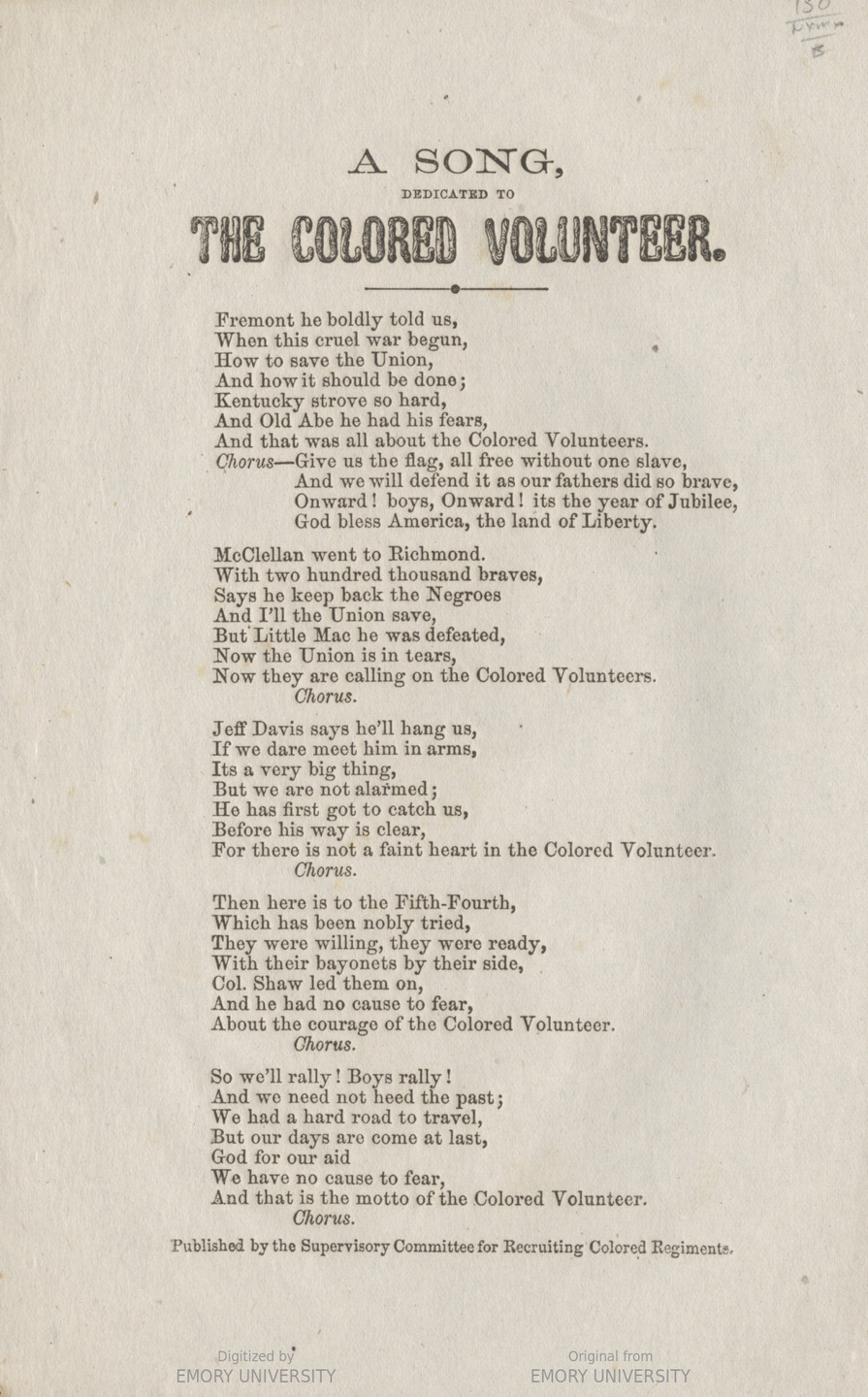
Song Sheet with Lyrics to "The Colored Volunteer"
This popular Civil War era song was first published in 1863 by by the Supervisory Committee for Recruiting Colored Regiments, and, in the years after the war, it served as the unofficial anthem of African American veterans. At Portsmouth, Ohio's celebration of the ratification of the Fifteenth Amendment in April 1870, William E. Ross, a black veteran, led the crowd in singing its lyrics. Written in five stanzas, and sung to the chorus: "Give us the flag, all free without one slave, And we will defend it as our fathers did so brave, Onward! boys, Onward! Its the year of Jubilee, God bless America, the land of Liberty." Another stanza states: "Jeff Davis says he'll hang us, If we dare meet him in arms, Its a very big thing, But we are not alarmed; He has first got to catch us, Before his way is clear, For there is note a faint heart in the Colored Volunteer." | Source: “A Song, Dedicated to the Colored Volunteer," (Philadelphia: Published by Supervisory Committee for Recruiting Colored Regiments, c1863) African American Imprints Collection, Stuart A. Rose Manuscript, Archives, and Rare Book Library, Emory University, Atlanta, Georgia.https://digital.library.emory.edu/purl/4300zpc8zx-cor | Date: 1863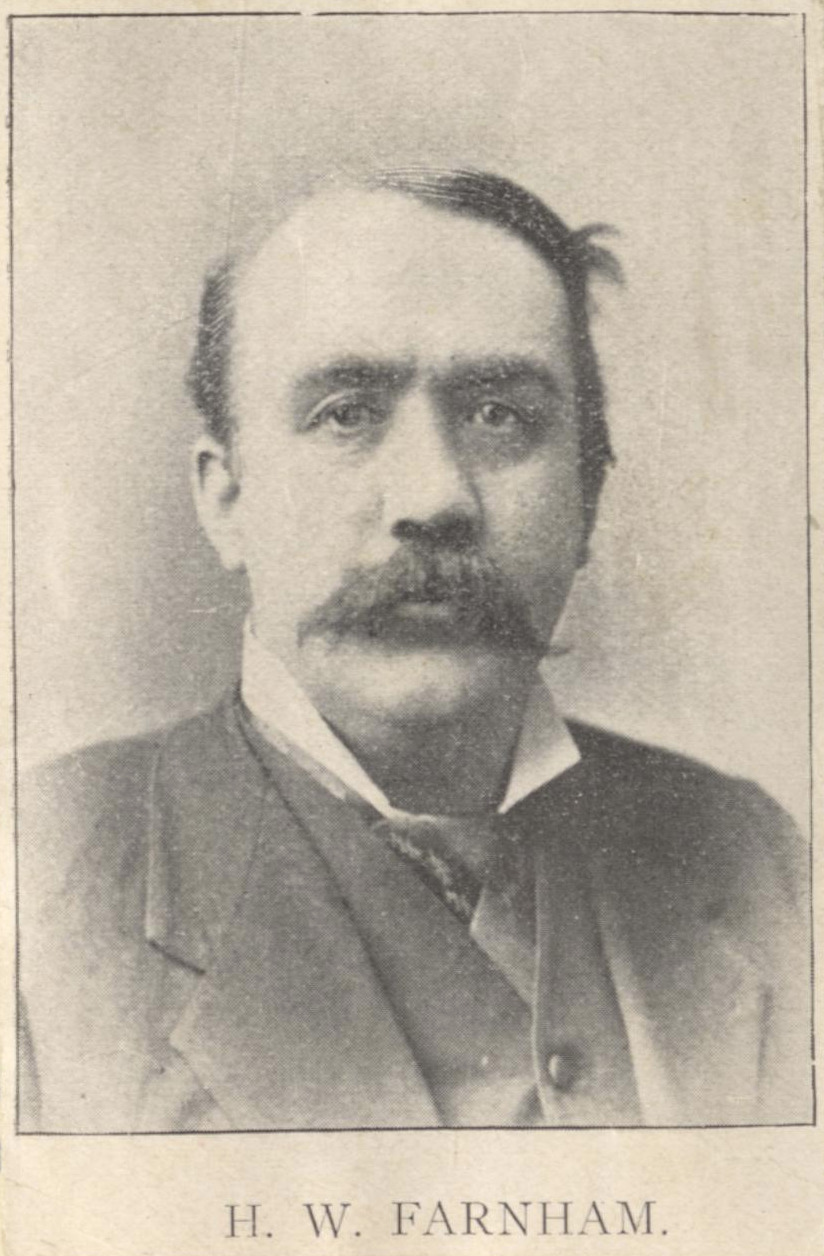
Portrait of H. W. Farnham
In 1885, Wilson Homer Farnham served as the attorney for Jacob Johnson, the father of Narcissa Johnson, who sued the Portsmouth School Board to secure his daughter's admission into the white-only Portsmouth High School. The lawsuit would lead to the integration of PHS in November 1885. Farnham was a native of Ashtabula, Ohio, and, during the Civil War, he had enlisted in a Pennsylvania volunteer infantry regiment at the age of twenty. At the end of the war, he was honorably discharged and soon thereafter, in the fall of 1865, he came to Scioto County, Ohio, where he took a position as a public school teacher. After three years in a Haverhill classroom in eastern Scioto County, Farnham moved to Portsmouth to study law under Nelson Wiley Evans, the noted Scioto County attorney and historian. At the Ratification Celebration for the Fifteenth Amendment in April 1870, Farnham would be among the white speakers on the program. Five years later, in 1875, Farnham was elected Scioto County Prosecuting Attorney as a Republican. He would serve two terms before returning to private practice. Farnham's health failed at the age of fifty-one. Suffering from heart failure, liver disease, and, according to his records at a Federal Veteran's Home in Dayton, a "morphine habit," he spent less than a year in the facility before he passed away in 1896. | Source: Henry A. Lorberg, Scrapbook Volume 7, Local History Digital Collection, Portsmouth Public Library, Portsmouth, Ohio.https://www.yourppl.org/history/items/show/23092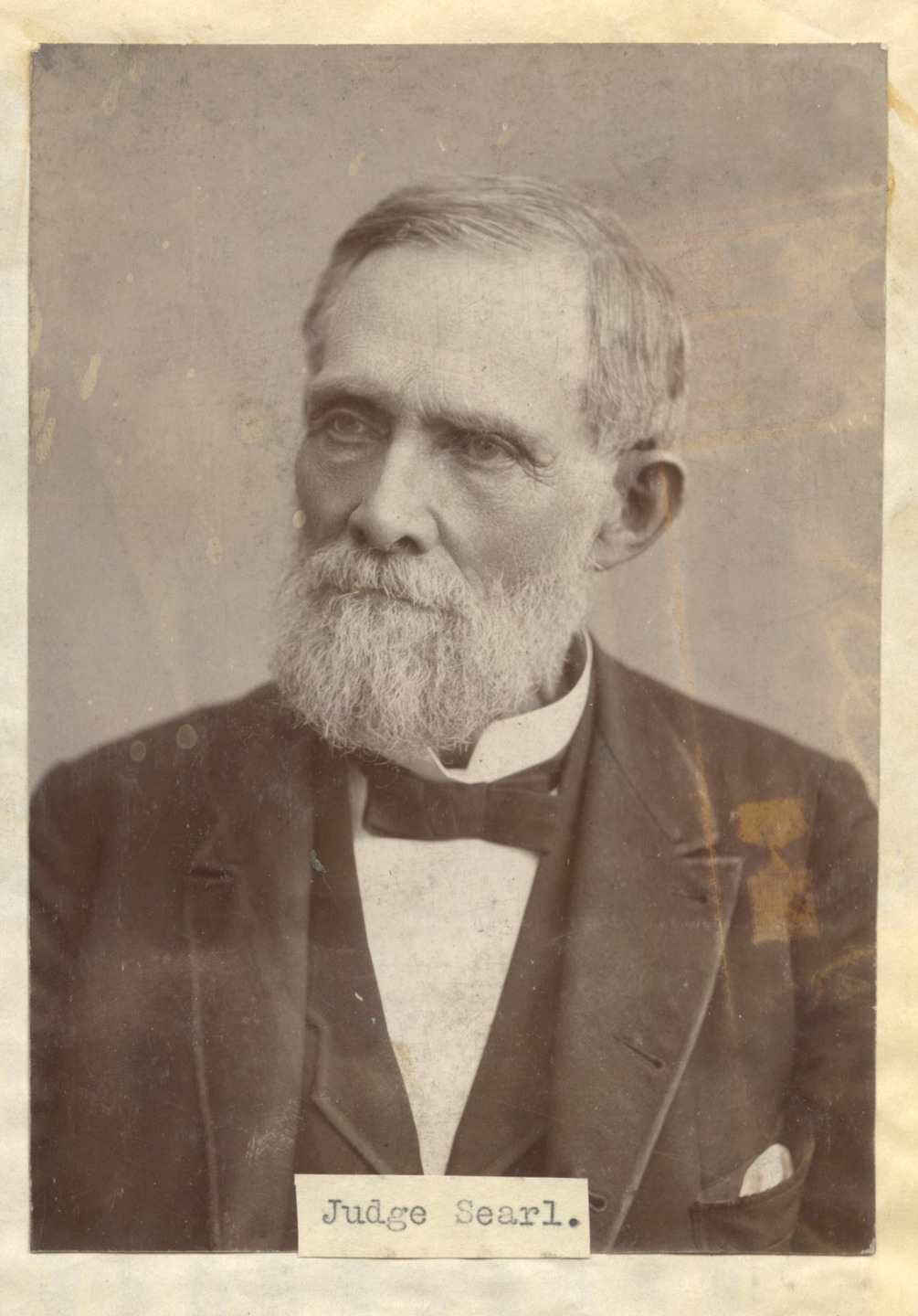
Portrait of Judge F. C. Searl
F. C. Searl, named after the Spanish conquistador Fernando Cortez, was born in Vernon Township, Scioto County, Ohio, on 18 July 1825. In April 1870, when Judge Searl spoke at the celebration of the Ratification of the Fifteenth Amendment, he was no longer on the bench, but in private practice. Nelson W. Evans, in his biographical account, noted that Searl's "father was pro-slavery and young Searl would take the side of anti-slavery. He was an abolitionist at eight years and had reasoned the matter out for himself." Searl, along with Milton Kennedy and Joseph Ashton were among the first to identify with the Republican Party. He was elected Scioto County Probate Judge in 1860 as a Republican and with the outbreak of the Civil War, Judge Searl would serve as Chairman of the Military Committee of Scioto County, supervising "the enlistment of volunteers and as friend of the negroes, he believed in recruiting them for service and did so. He put them in service and secured them bounties from $150 for single men to $250 for married men." In 1864, he himself enlisted in Company F of the 140th Ohio Volunteer Infantry, serving as a First Lieutenant. | Source: Henry A. Lorberg, Scrapbook Volume 3, Local History Digital Collection, Portsmouth Public Library, Portsmouth, Ohio.https://www.yourppl.org/history/items/show/22228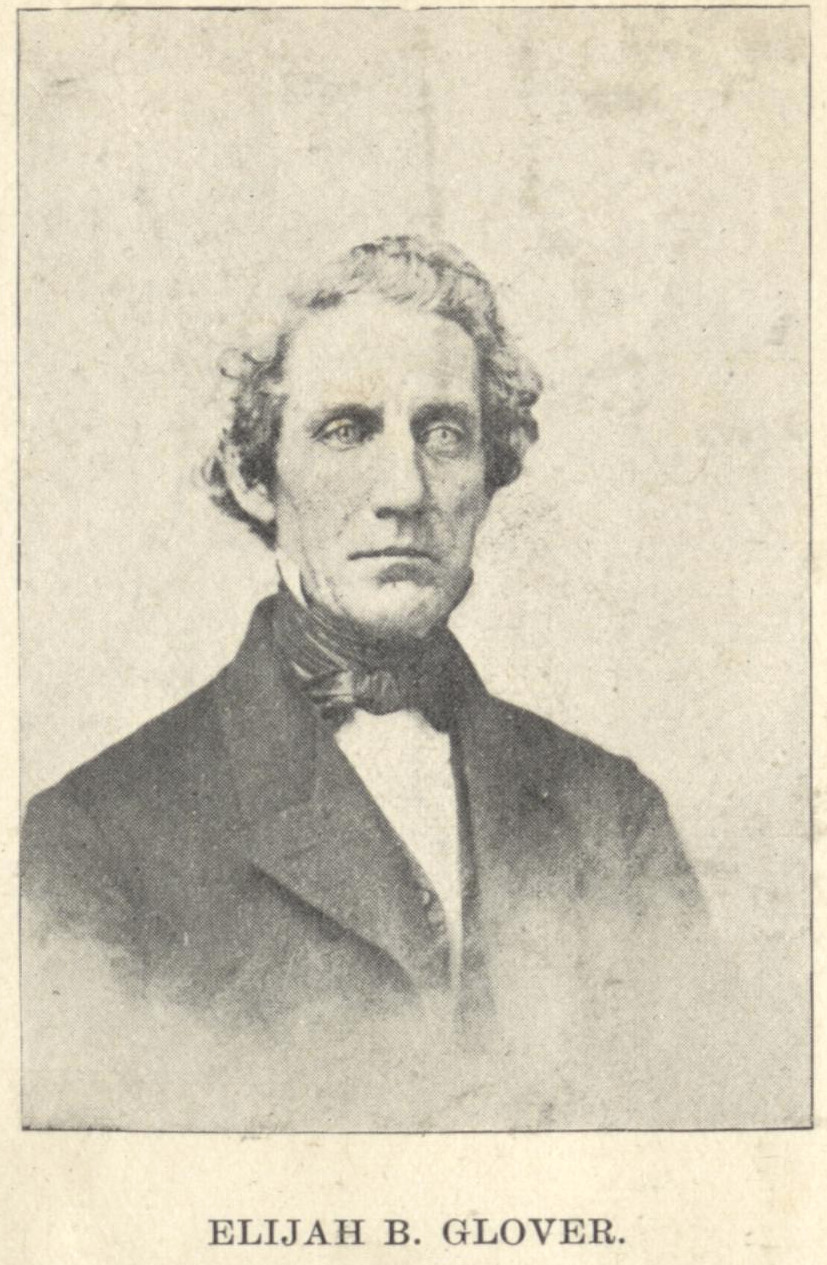
Portrait of the Hon. Elijah Glover
At the time of the ratification of the Fifteenth Amendment in 1870, Elijah B. Glover was recognized for having cast the deciding vote in the Ohio State Legislature, which ensured its ratification in Ohio. Glover defeated James W. Newman (D) for the House seat in the fall of 1870 and was thus serving in Columbus when the Fifteenth Amendment came up for a vote. Newman had unsuccessfully contested the election, claiming that Glover had won with the assistance of illegal black voters, who were passing as white. Glover had a long career in Portsmouth politics as a Whig (and later as a Republica), having founded the Portsmouth Courier (what in time became the Portsmouth Tribune) in 1831. | Source: Henry A. Lorberg, Scrapbook Volume 1, Local History Digital Collection, Portsmouth Public Library, Portsmouth, Ohio. https://www.yourppl.org/history/items/show/21248